
Long before “cottagecore” was a word anyone used online, the cottage garden was a real, working piece of land. Its romantic, overflowing look didn’t start as a design choice — it grew out of necessity, and the story of how it became one of the most beloved garden styles in the world is more interesting than the aesthetic alone suggests.
Born Out of Necessity, Not Fashion
The earliest cottage gardens appeared in medieval England, planted by rural laborers who had little land and even less time. These were not decorative spaces. A cottage garden needed to feed a family, treat their ailments, and repel pests, all within a tiny plot next to a one-room home. Vegetables, herbs, and fruit trees were planted close together, not for visual effect but to make the most of every inch of soil. Herbs like rue, tansy, and lavender were grown as much for medicine and moth-repelling as for scent. Bees were kept for honey and wax. Nothing was purely ornamental because nothing could afford to be.
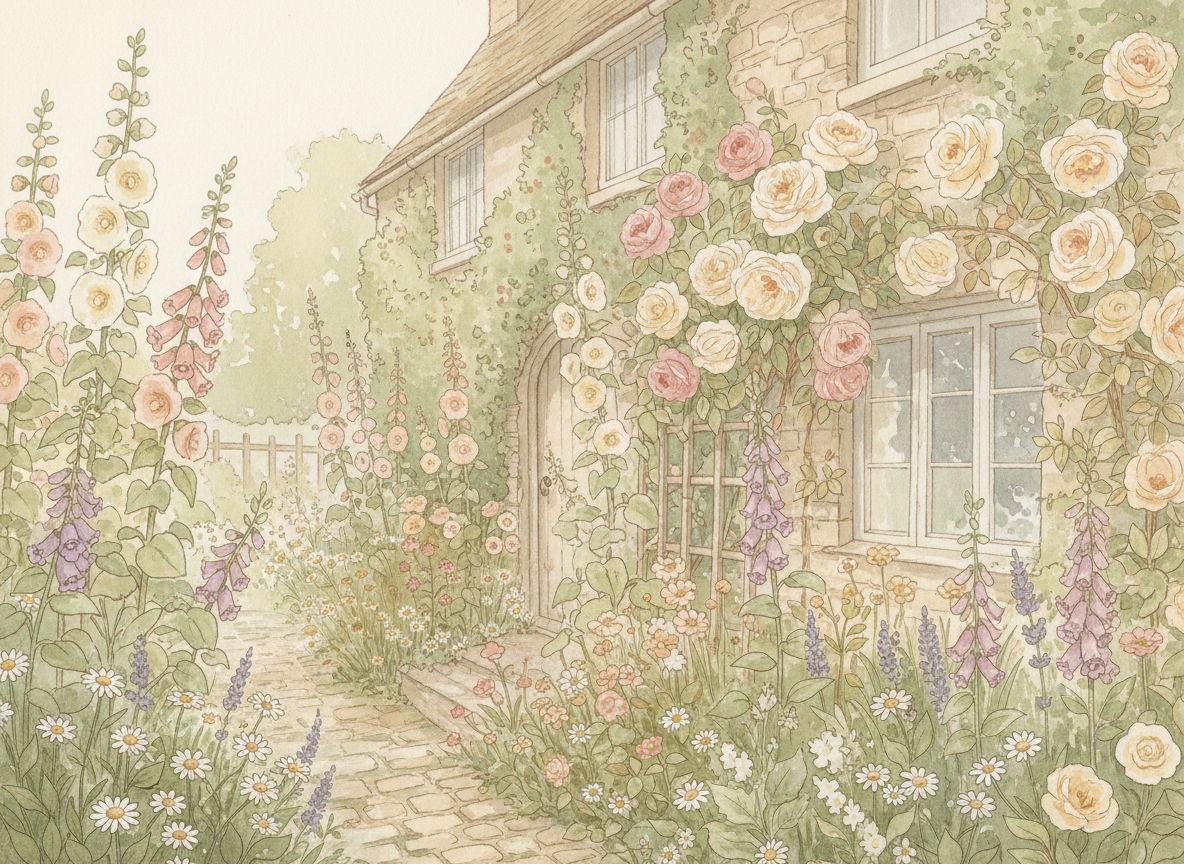
What we now recognize as the “cottage garden look” — dense, informal, slightly wild — was really just the visual result of efficient, layered planting. Tall plants grew behind short ones, climbers used fences and walls instead of costly trellises, and self-seeding flowers were left alone because pulling them up wasted effort. The look was a byproduct of practicality, not a plan.
The Victorians Turn Necessity Into Nostalgia
By the 19th century, the cottage garden had a very different audience. As Britain industrialized and city populations exploded, the countryside became a symbol of a simpler, more virtuous life that many people had actually just left behind. Wealthy Victorian gardeners and writers, most famously the influential garden designer Gertrude Jekyll, began deliberately imitating the informal, cottage look in much larger, more manicured gardens.
This is the moment the cottage garden shifted from a working-class necessity to an upper-class aesthetic choice. Jekyll and her contemporaries kept the layered, informal planting style but added a painter’s sense of color theory, arranging drifts of flowers by hue and season rather than by usefulness. The vegetables mostly disappeared, replaced by roses, delphiniums, foxgloves, and hollyhocks. The garden was no longer feeding anyone — it was performing a feeling: nostalgia for a rural life that was quickly disappearing.
The Plants That Define the Style
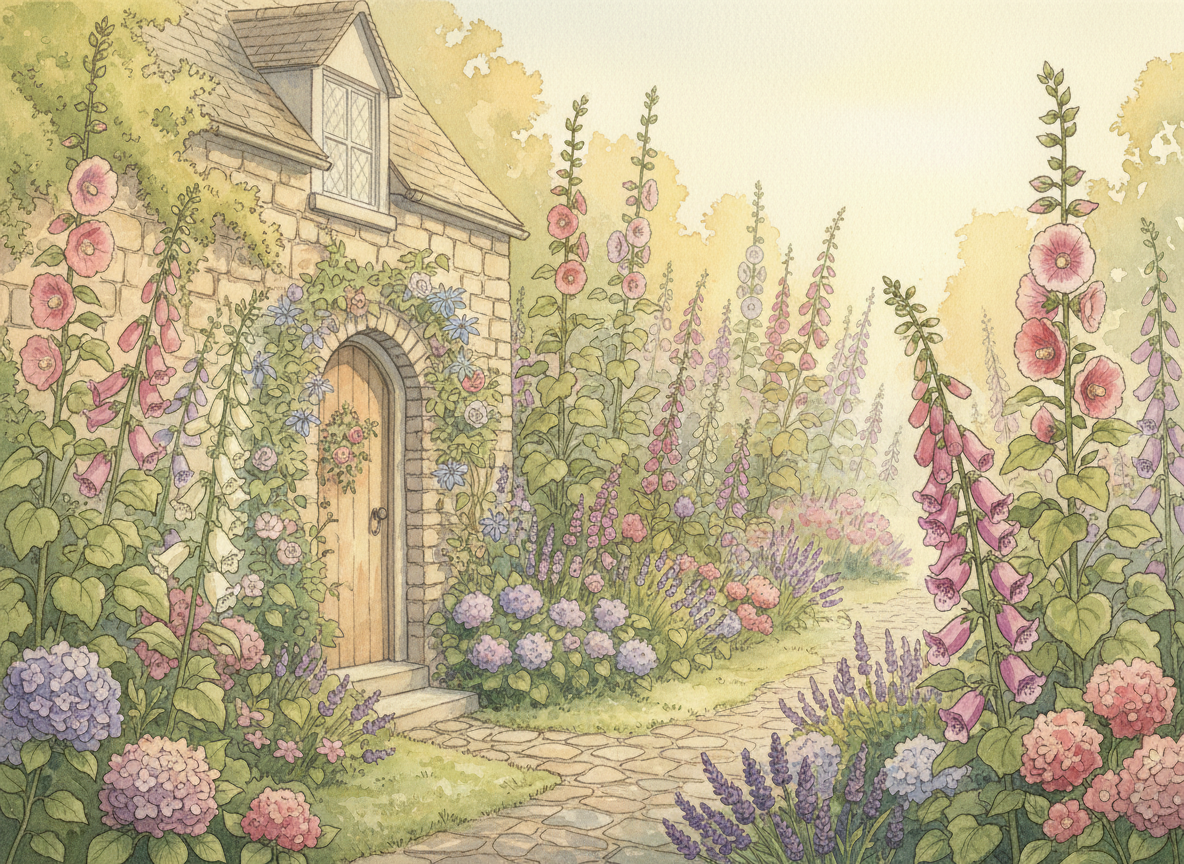
A handful of plants recur again and again in both historical and modern cottage gardens, and each one earns its place differently:
- Hollyhocks — tall, old-fashioned, and self-seeding, often grown right against cottage walls where they lean for support.
- Foxgloves — biennial spires that thrive in the dappled shade at a garden’s edge, historically used medicinally despite being toxic.
- Sweet peas — climbing, fragrant, and endlessly re-blooming if cut regularly, a favorite for informal fences and obelisks.
- Lavender — originally grown for its insect-repelling and medicinal properties, now mostly prized for scent and its soft purple haze.
- Roses, especially old, loosely-petaled varieties rather than modern hybrid tea roses, which look too formal for the style.
Why the Look Endures
The cottage garden has been “rediscovered” by nearly every generation since the Victorians, and each time, the appeal comes back to the same thing: it looks alive rather than arranged. A formal garden reads as controlled nature; a cottage garden reads as nature that’s been gently guided rather than dominated. In an era of manicured lawns and minimalist landscaping, that slightly untamed, layered abundance feels emotionally warmer — which is exactly why the look has migrated indoors, into wallpaper, textiles, and wall art that borrow its colors and its sense of gentle overgrowth without needing a single square foot of actual soil.
If this kind of soft, botanical, cottage-inspired look speaks to you, we illustrate it as watercolor wall art prints in our Etsy shop, NaturalEMNB.
 Cottagecore Prints
Leave a comment