
Few natural objects have inspired as much folklore relative to their size as the mushroom. Small, strange-shaped, appearing seemingly overnight, and sometimes forming perfect circles in open grass, mushrooms gave people for centuries something they couldn’t easily explain — so they told stories instead.
What a Mushroom Actually Is
A mushroom is only the visible “fruit” of a much larger organism. The real body of the fungus, called mycelium, is a network of thread-like filaments that can spread for meters (sometimes far more) underground or through decaying wood, entirely out of sight. What we call a mushroom exists purely to release spores, the fungal equivalent of seeds — which is also why mushrooms can seem to appear overnight: the mycelium network has often been growing quietly for a long time before conditions (usually moisture and temperature) trigger it to suddenly send up fruiting bodies.
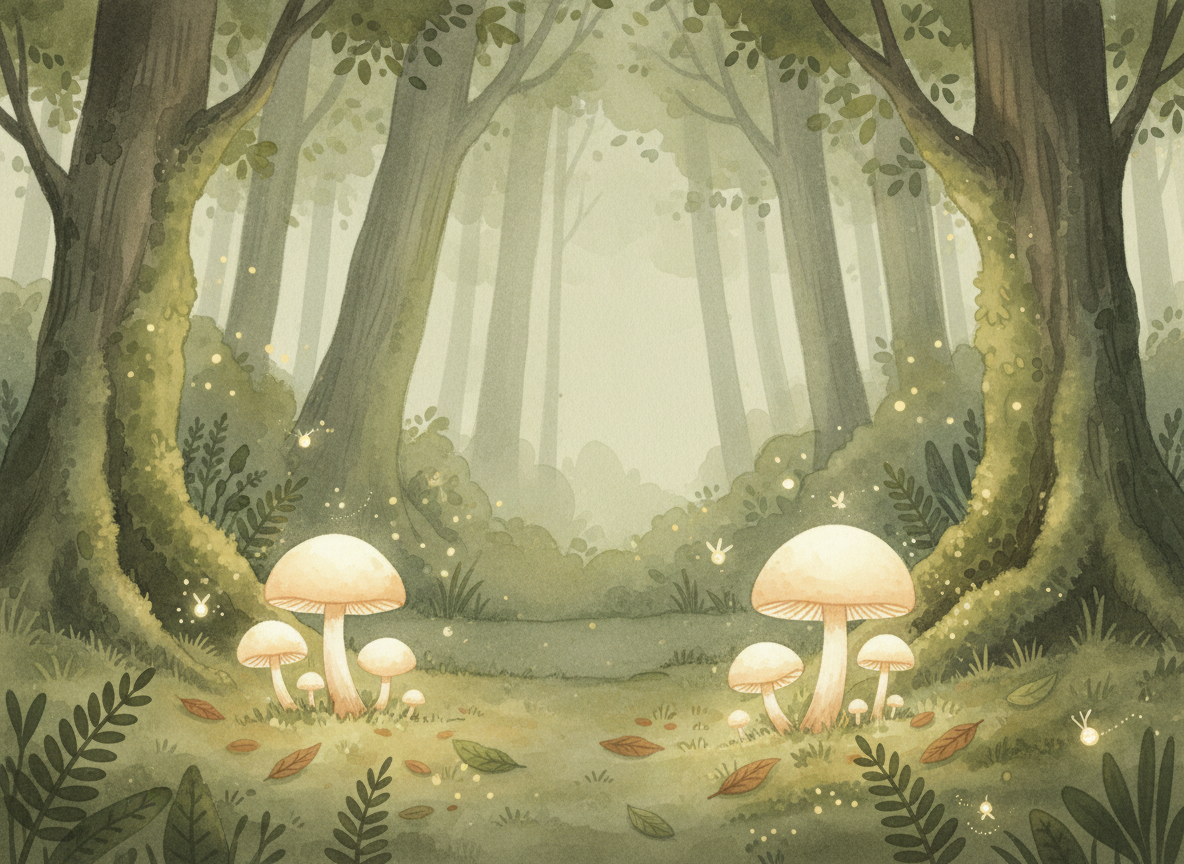
The Truth Behind Fairy Rings
A “fairy ring” — mushrooms growing in a near-perfect circle — has a straightforward biological explanation: mycelium spreads outward from a central point at a roughly even rate in all directions, so the fruiting mushrooms it eventually produces trace the edge of that expanding circle. Some fairy rings are decades or even centuries old, and a few documented rings in France and elsewhere are estimated to be hundreds of meters across after centuries of gradual outward growth.
What People Believed Instead
Without that explanation, cultures across Europe developed their own. In English and Celtic folklore, fairy rings were said to mark where fairies had danced in a circle overnight, and stepping inside one was considered risky — some legends held that a person could be trapped dancing with the fairies for what felt like a single night but was actually years in the outside world. German folklore sometimes attributed the rings to witches’ gatherings (Hexenringe, or “witches’ rings”), while Scandinavian tradition linked them to elves. Not every tradition treated them as dangerous — some saw fairy rings as a sign of good luck or fertile land, since the grass inside and around a ring often grows visibly greener, a real effect caused by the mycelium releasing nutrients into the soil as it breaks down organic matter.
Mushrooms as Omens and Messengers
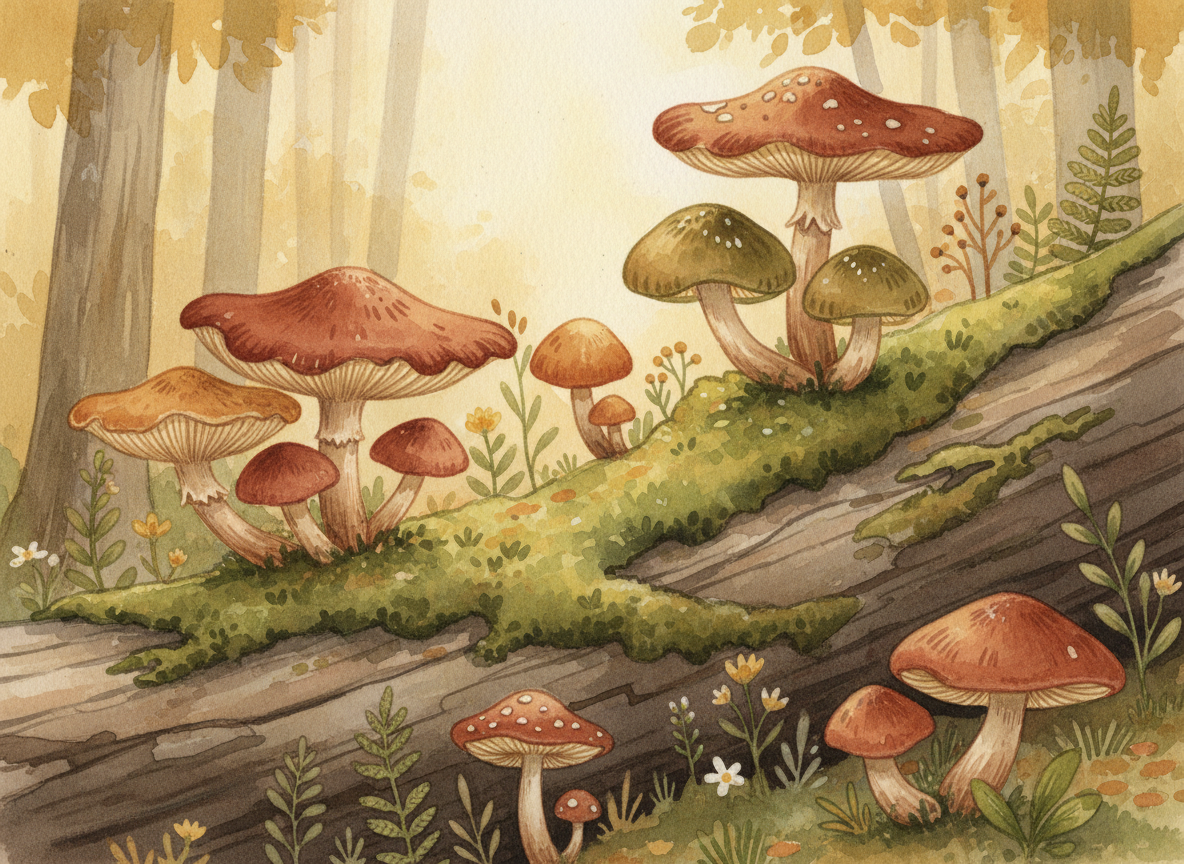
Beyond fairy rings, individual mushroom species picked up their own folklore roles. Certain toadstools were considered warnings of poison or ill fortune, which wasn’t always superstition — many of the most visually striking mushrooms genuinely are toxic, so treating unfamiliar fungi with caution was often good survival advice dressed up as legend. In parts of Slavic and Baltic folklore, mushrooms were treated as morally neutral but slightly otherworldly, existing in a category between plant and something stranger, since they didn’t grow from seeds the way everything else in a garden did.
Why Mushrooms Still Feel Magical
Even with the biology fully explained, mushrooms keep their charm. They still seem to appear from nowhere, still form circles that look deliberate, and still carry an air of the forest floor’s hidden life going on mostly unseen — which is probably exactly why they never stopped showing up in fairy tales, and why they’re still one of the most-loved motifs in cottagecore art today.
We turn this same fairy-tale mushroom charm into wall art — see our botanical and mushroom prints in our Etsy shop, NaturalEMNB.
 Cottagecore Prints
Leave a comment