
Long before emoji gave us a shorthand for feelings we didn’t want to type out plainly, there was floriography: the language of flowers. For a few decades in the 19th century, an entire hidden vocabulary of meaning was attached to nearly every flower, herb, and wild plant that grew in a European hedgerow, and knowing it could change the entire meaning of a bouquet.
Why a Secret Flower Code Existed at All
Victorian society ran on rigid rules about what could and could not be said, especially between men and women who weren’t married or closely related. Direct declarations of love, jealousy, or rejection were often considered improper, especially for women. Flowers filled the gap. A carefully chosen bouquet, or even a single stem, could carry a message that would have been scandalous to say aloud: affection, warning, refusal, longing, forgiveness.
The trend exploded after a handful of dictionaries of flower meanings were published in France and then England in the early-to-mid 1800s, most notably Charlotte de la Tour’s “Le Langage des Fleurs.” Suddenly, ordinary people had a reference guide for saying complicated things without saying them at all.
What Common Wildflowers Actually Meant
Most floriography dictionaries didn’t fully agree with each other, which occasionally led to real miscommunication, but a handful of meanings became widely accepted:
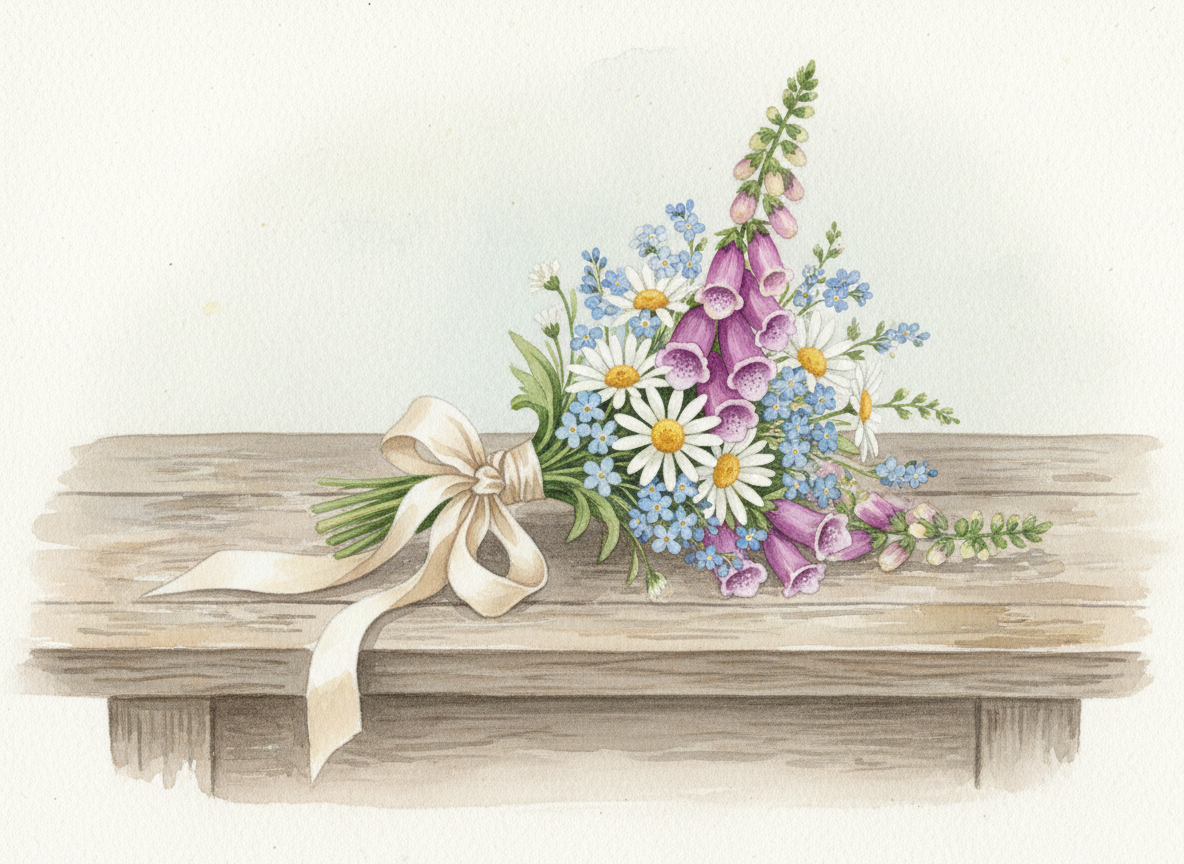
- Forget-me-not — true and lasting love, or a request to be remembered during a long absence.
- Daisy — innocence and loyal love; the “he loves me, he loves me not” petal game comes directly from this symbolism.
- Foxglove — insincerity, and sometimes a subtle warning, likely tied to the plant’s genuine toxicity.
- Poppy — consolation, sleep, and eternal rest — the same association that later made it a symbol of remembrance after the First World War.
- Lavender — devotion and calm, often exchanged as a quiet gesture of steady, undramatic affection.
- Clover, especially four-leafed, — luck, and in some dictionaries, a wish for the recipient’s good fortune specifically.
How a Bouquet Became a Sentence
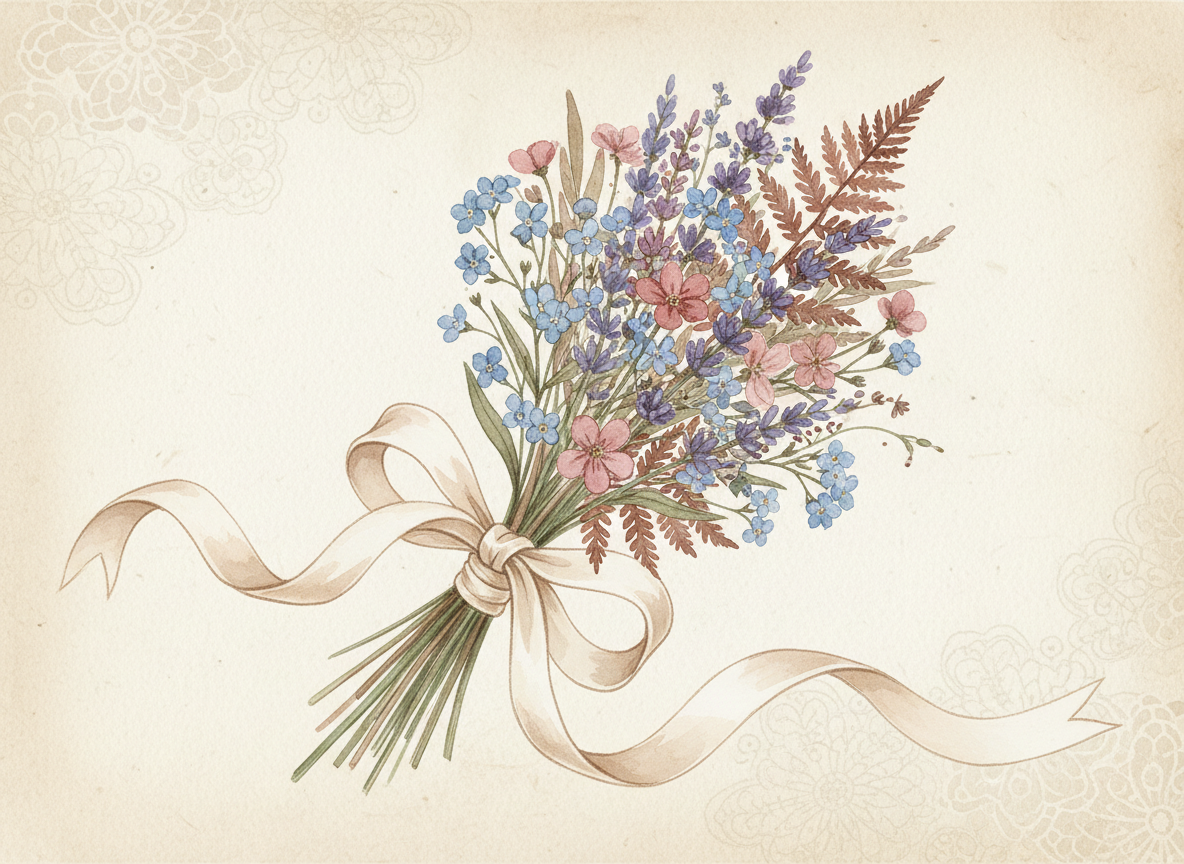
The real complexity came from combination. A single flower carried one meaning, but a small bouquet, called a tussie-mussie, could be arranged like a short sentence. The way it was presented mattered too: handed over upright, the meaning applied to the giver’s feelings; handed over upside down, it could reverse the meaning entirely. Even which hand was used to receive it, or whether the ribbon was tied to the left or right, could shift the message. It was, in effect, a fully improvised language built entirely out of plants, color, and gesture.
Why It Still Resonates
Floriography faded as fashions changed, but the instinct behind it never really left. We still give flowers at funerals, weddings, and apologies without needing a dictionary to know that white suggests purity, red suggests love, or that a single wildflower feels more personal than an arrangement from a shop. The wildflowers themselves — daisies, forget-me-nots, poppies scattered through a meadow — still carry that same quiet, sentimental weight, which is probably why they show up so often in art, textiles, and home decor meant to feel warm and a little nostalgic.
We paint many of these same wildflowers into our watercolor wall art prints, available in our Etsy shop, NaturalEMNB.
 Cottagecore Prints
Leave a comment