
Almost every culture that has lived alongside rabbits and hares has told stories about them, and remarkably, many of those stories land on similar themes despite having no contact with each other. Cleverness, fertility, and a strange, persistent link to the moon show up again and again, which raises a genuinely interesting question: what is it about this particular animal that captures the human imagination so consistently?
The Trickster Archetype
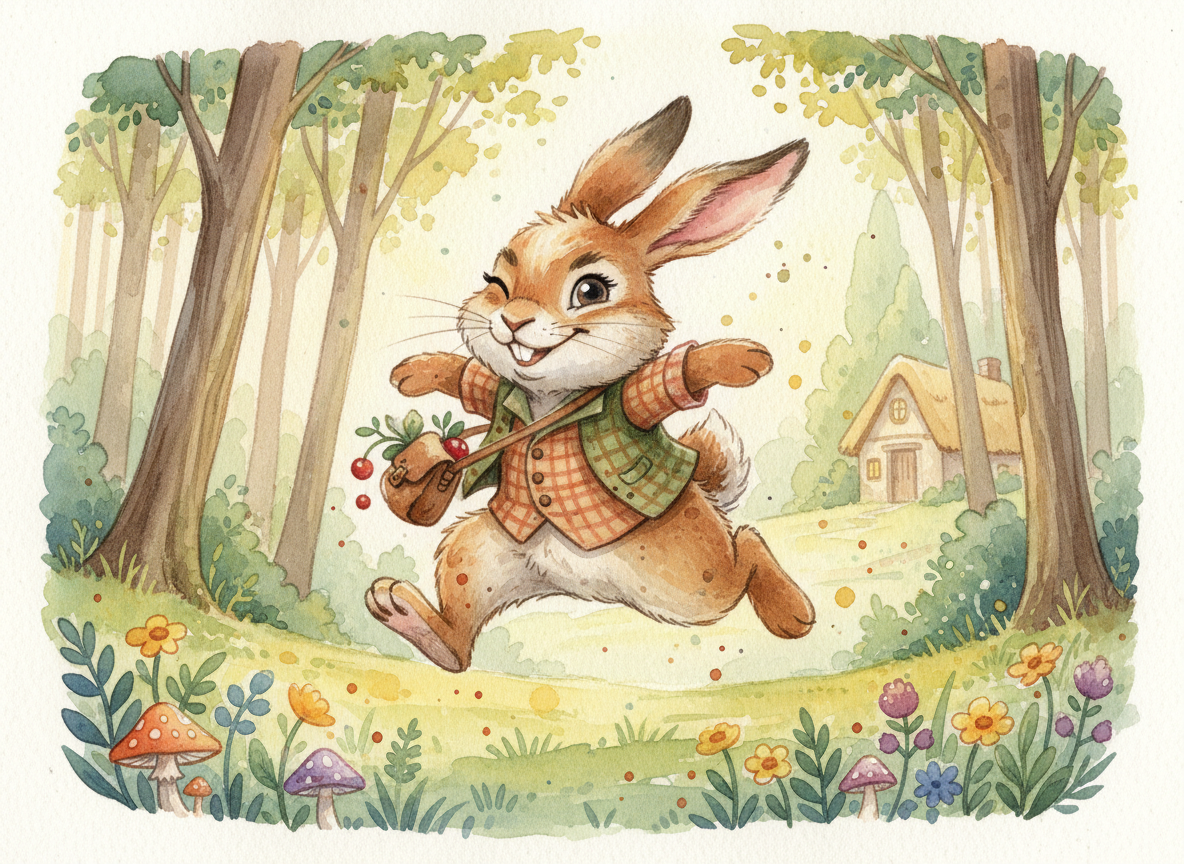
In West African Anansi tales and their descendants in the American South, the rabbit — most famously Br’er Rabbit — survives entirely on wit rather than strength. He’s smaller and weaker than nearly every animal he encounters, so his stories are built around outsmarting foxes, bears, and wolves through misdirection, false humility, and clever wordplay. This pattern repeats independently in Native American folklore, where the trickster hare appears among the Algonquian peoples as a shape-shifting culture hero, and in European fables, where the hare’s speed and cunning make it a natural foil for slower, more brute-force animals like the tortoise or the wolf.
The pattern isn’t a coincidence of storytelling fashion. Rabbits and hares really do rely on speed, evasive movement, and unpredictability to survive in the wild rather than physical dominance, and early observers of animal behavior across completely unconnected cultures apparently drew the same conclusion from watching them: this is an animal that wins by being smarter, not stronger.
A Symbol of Fertility
Rabbits reproduce quickly and often, a biological fact that ancient observers noticed just as clearly as we do today. That observation turned the rabbit into a natural symbol of fertility, abundance, and springtime renewal across many agricultural societies. The Easter Bunny traces back through older European spring festivals tied to fertility goddesses, where eggs and rabbits, both potent fertility symbols in their own right, were eventually merged into a single springtime figure.
The Rabbit on the Moon
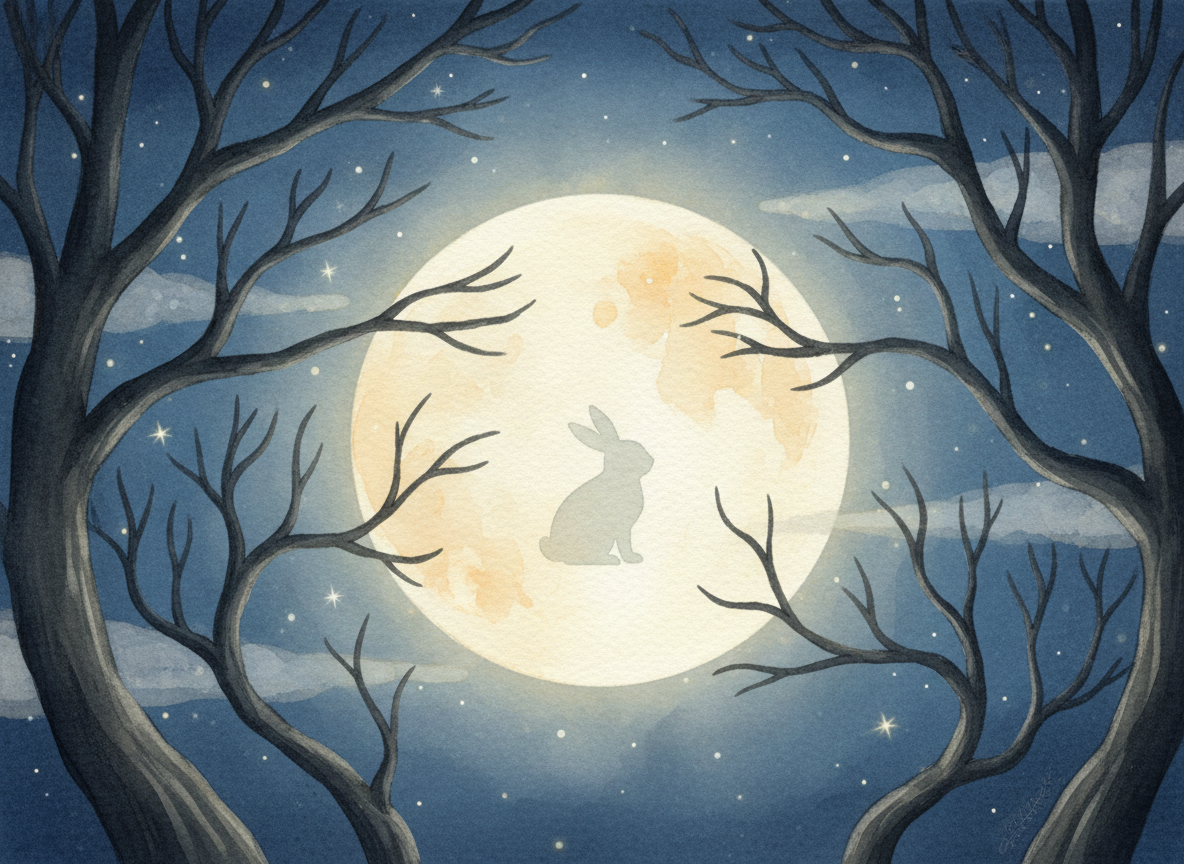
Perhaps the most striking cross-cultural pattern is the Moon Rabbit. In Chinese, Japanese, Korean, and various Mesoamerican traditions, people looking at the moon’s surface pattern have independently described seeing a rabbit rather than the “man in the moon” more familiar in Western folklore. In Chinese mythology, the Jade Rabbit lives on the moon pounding the elixir of immortality with a mortar and pestle, often as a companion to the moon goddess Chang’e. In an Aztec legend, a god flattens his own face against a rabbit to dim his brightness and make him more bearable to look at, leaving the rabbit’s shape permanently imprinted on the moon’s surface.
What’s notable here is that this isn’t a shared myth passed between cultures — it’s the same pattern-recognition happening independently around the world, because the actual light and dark patches on the moon really can resemble a crouching rabbit if you look at them a certain way. It’s a rare case of astronomy and imagination arriving at the same image from opposite directions.
Luck, Charms, and the Rabbit’s Foot
The belief that a rabbit’s foot brings luck traces back to European and African folk traditions that treated the rabbit as an animal with one paw literally touching the underworld, since rabbits live in burrows dug into the earth. Carrying a piece of that connection was thought to transfer some of the rabbit’s luck, speed, and fertility to its owner — a belief that has persisted, in watered-down form, into modern keychains and charm bracelets.
Rabbits and hares are frequent characters in our own watercolor illustrations too, available as wall art prints in our Etsy shop, NaturalEMNB.
 Cottagecore Prints
Leave a comment